

Introduction
A useful jewellery content shoot begins before the shot list.
The products, people, locations and formats matter, but they should follow a clearer decision: what does the business need the content to do?
Without that definition, a production can create beautiful work and still leave the marketing team without the assets required for the campaign, website, email, retail or social calendar.
1. The Business Objective
Start with the reason the production exists.
Is the brand launching a collection, replacing an outdated library, supporting a retail period, educating customers, entering a new market or creating enough content for the next quarter?
One production can support several channels, but it should still have a clear priority. That priority helps the team make decisions when time, products or budget create trade-offs.
2. The Customer And The Message
Define who the content needs to reach and what they should understand or feel.
A trade buyer, an engagement-ring customer and an existing collector do not need the same information. Product detail may lead in one situation, while scale, styling, craftsmanship, trust or emotional meaning may matter more in another.
This decision influences the creative direction more usefully than beginning with a trend or reference image alone.
3. Product Priorities
Create a clear hierarchy before the jewellery arrives on set.
Identify:
Hero products and collections
Pieces that need ecommerce or catalogue coverage
Products requiring scale or on-body context
Details that are difficult to explain in still imagery
Commercial priorities for the coming period
Combinations that can be styled or told together
Trying to give every piece equal time can leave the production with plenty of files but no strong hero work.
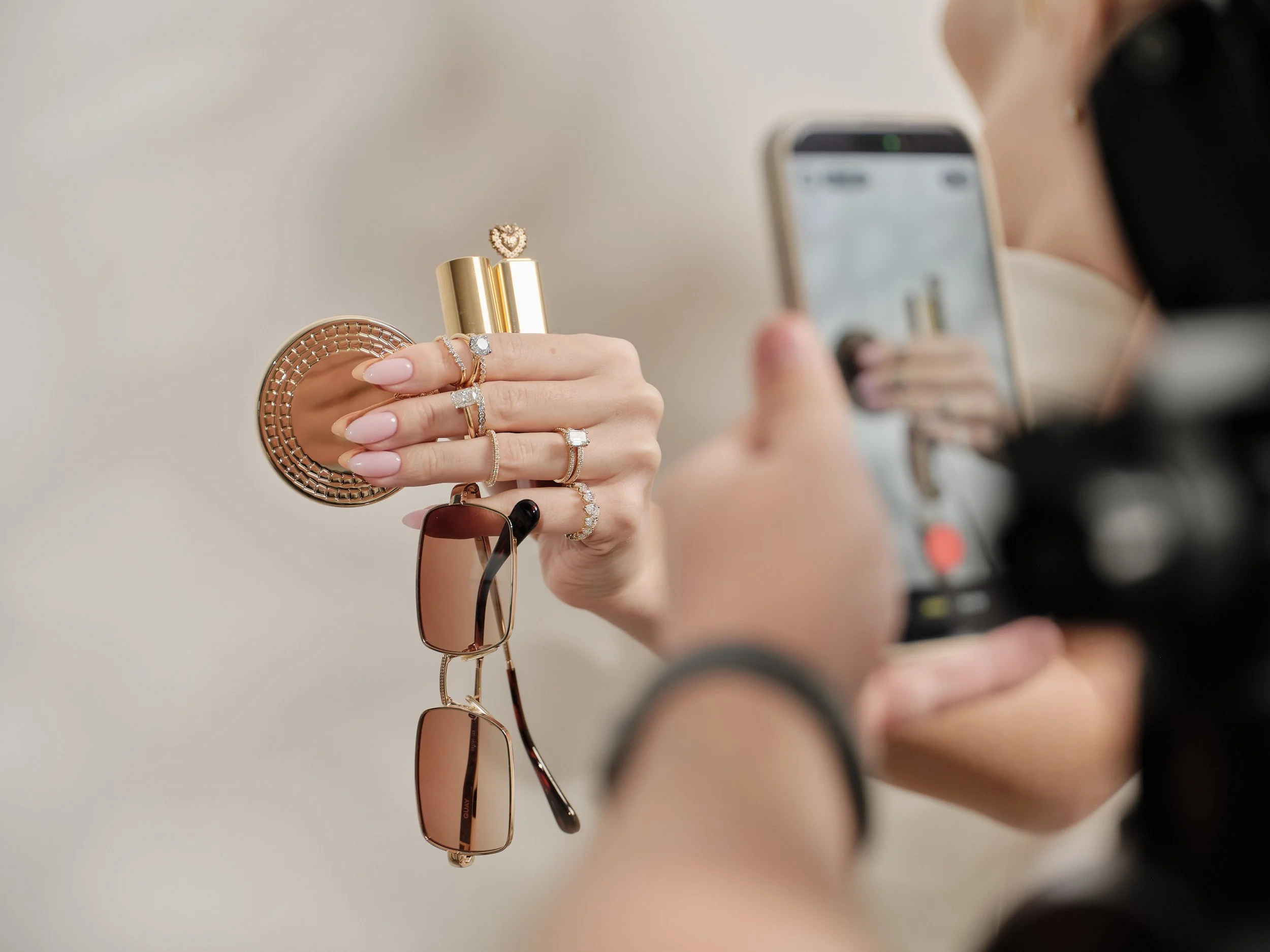
4. A Balanced Story Mix
Jewellery marketing becomes repetitive when the product is always shown in the same way.
A useful production may move between:
Product
Clear detail, materials, finish and design.
Craft
Hands, tools, process, workshops and the expertise behind the piece.
Lifestyle
Jewellery worn naturally within a broader moment.
Editorial
More expressive campaign imagery that shapes how the collection or brand feels.
Not every shoot needs all four, but the team should decide the mix deliberately.
5. People And Authority
Consider whether the content would become stronger with founders, designers, jewellers, retail staff, customers or models.
People can create scale, trust and human connection. They can also explain technical information or bring the craftsmanship behind the product into view.
Not everyone needs to deliver polished pieces to camera. Hands, conversation, movement and guided expertise can make the content feel human without turning staff into professional presenters.
6. Photography And Video Roles
Decide what each format needs to contribute.
Photography may carry campaign hero imagery, ecommerce detail, catalogue use and flexible supporting assets. Video may show movement, wear, making, education, atmosphere or people in a way a still image cannot.
When both are required, plan them together. This creates consistency and prevents video from becoming a few rushed clips captured after the photography is finished.
7. Channels And Formats
List the real destinations for the content before production.
These may include:
Website and ecommerce
Social feeds and vertical video
Email
Digital campaigns
Catalogues and retailer assets
Trade exhibitions
In-store screens and signage
Press or editorial opportunities
The destination affects orientation, crop, pacing, negative space, duration and file requirements. A versatile library is planned, not rescued during editing.
8. Practical Production Details
The brief should also confirm the operational information that protects the creative plan:
Product list and security
Dates and approvals
People and availability
Location or studio requirements
Styling, props and wardrobe
Brand and campaign references
Usage requirements
Deliverables and formats
Review and selection process
These details should support the objective rather than replace it.
9. A Plan For Use After Delivery
The shoot is not finished when the files arrive.
Map the most important assets to the campaign, content calendar and channels. Identify which pieces are hero content, which support product or education and which can be reused over time.
This helps the internal team make better use of the investment and reveals the next genuine content gap.
A jewellery content shoot should include the right mix of products, stories, people, formats and practical detail to solve a defined marketing requirement.
Start with the business objective. Plan for use. Then create.
Related links: Explore Jewellery Photography Explore Jewellery Videography Explore Jewellery Content Creation Start a Conversation
